
6 Min Read
Not sure whether your deck needs a simple repair or a full replacement? It’s a common question, and the answer depends on a few key signs.
In this blog, we explain how to decide between deck repair and replacement. You’ll learn what signs to look for, how damage impacts safety and cost, and how to choose the best option for your home and outdoor space.
Here's an overview of what we'll cover:
- Signs Your Deck Can Be Repaired
- When It’s Time to Replace Your Deck
- Deck Repair vs Replacement: Key Factors to Consider
- How Kansas Weather Affects Deck Lifespan
- Checklist: Is Your Deck Safe and Worth Repairing?
- How Fox Home Innovations Helps Homeowners Upgrade Outdoor Spaces
- FAQs About Deck Repair and Replacement
Signs Your Deck Can Be Repaired
Not every deck issue means you need to start over. In lots of cases, targeted repairs can restore your deck without the need to start from scratch.
Decks naturally experience wear over time, especially with exposure to sun, moisture, and seasonal temperature changes in Kansas. The key is understanding whether the damage is surface-level or something deeper.
Some of the most common signs your deck can be repaired include:
- A few damaged or weathered deck boards:
Individual boards that are cracked, splintered, or worn can usually be replaced without affecting the rest of the structure. - Loose railings or fasteners:
Railings, stairs, or hardware that feel unstable can often be tightened, reinforced, or replaced to restore safety. - Surface wear or fading:
Sun exposure and weather can cause discoloration over time, but cleaning, staining, or sealing can bring the deck back to life. - Minor cracking or splitting in the wood:
Small cracks are common as wood ages and don’t always indicate structural issues. - Cosmetic concerns:
If your deck still feels solid underfoot but looks a little tired, repairs and refinishing can make a big visual impact.
In situations like these, repairing your deck can extend its lifespan and improve how it looks and feels without the cost of a full replacement.
When It’s Time to Replace Your Deck
Some deck issues are easy to fix. Others are a sign there’s more going on underneath.
Over time, weather and everyday wear can take a toll on both the surface and the structure below. When that starts to happen, repairs might not fully solve the problem.
In those cases, replacing the deck is often the better long-term option.
Signs it may be time to replace your deck include:
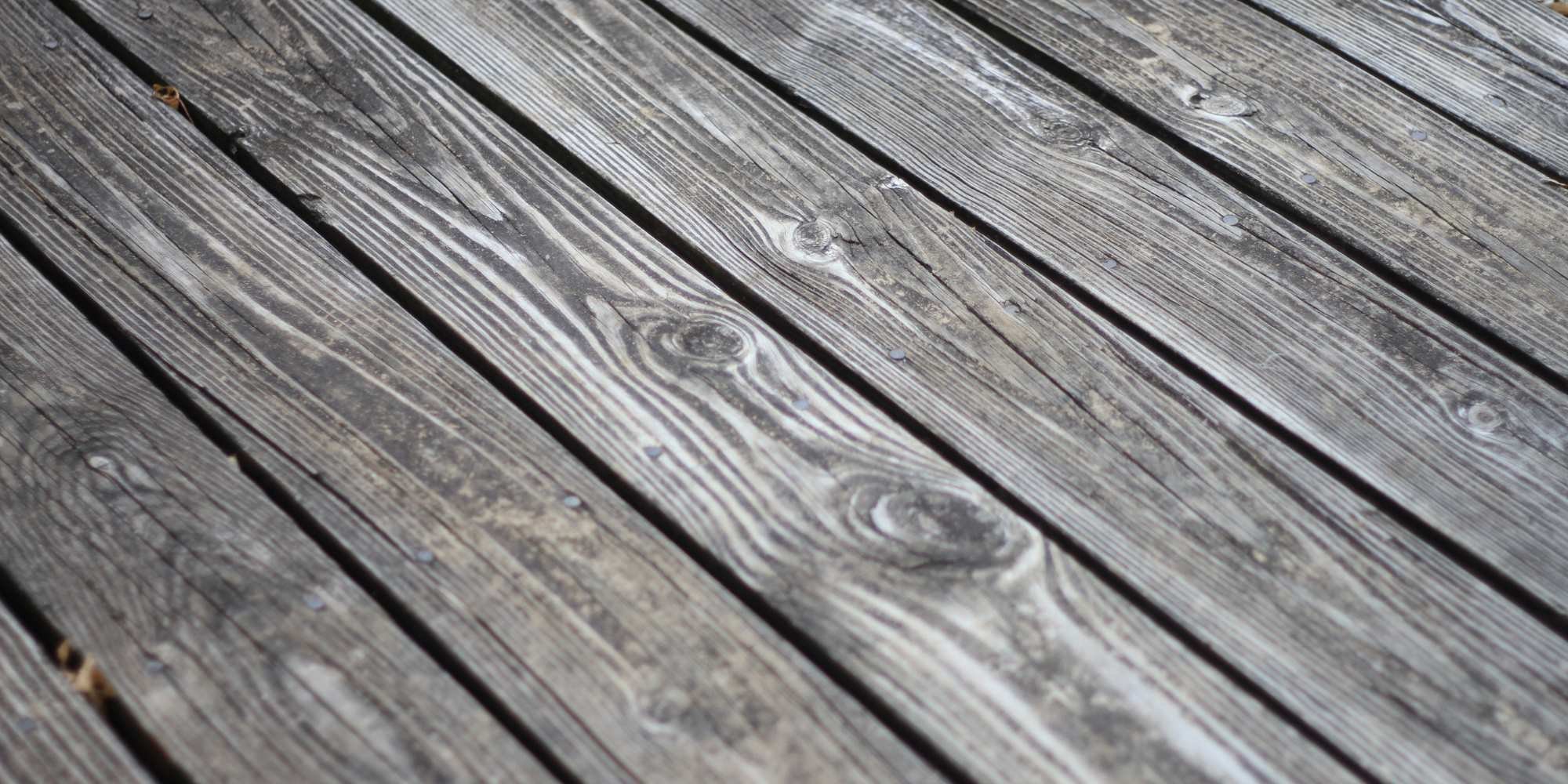
- Widespread rot or soft wood:
If large areas of your deck feel spongy or show signs of rot, the damage may go beyond just the surface boards. - A deck that feels unsteady or shifts when you walk on it:
Movement or wobbling can be a sign that the framing or supports underneath are no longer stable. - Sagging or uneven areas:
Dips or uneven sections often point to issues with the structure below the deck boards. - Damage to joists, beams, or supports:
These parts hold your deck up. If they’re compromised, repairs may not be enough to restore safety. - Ongoing repairs that don’t seem to solve the problem:
If you’ve fixed a few issues and new ones keep popping up, it may be time to step back and look at the bigger picture.
Safety is a big part of this decision. A deck that’s starting to break down structurally isn’t just worn. It can become a concern for your family and guests.
The good news is that replacement also creates an opportunity. It gives you a fresh start with updated materials, a more durable structure, and the chance to rethink how your outdoor space works for you.
Deck Repair vs Replacement: What Should You Consider?
Deciding whether to repair or replace your deck isn’t always straightforward. In many cases, it comes down to a mix of condition, cost, and how you want to use your space moving forward.
If you’re on the fence, here are a few key things to think through.
Cost (Now vs Later)
Repairs are usually the more affordable option upfront, especially if the issues are limited to a few boards or surface-level wear.
But if your deck needs frequent repairs or if problems keep coming back, those costs can start to add up. In those situations, replacement may actually be the better investment over time.
Safety and Structure
If your deck still feels solid and stable, repairs can often take care of the problem. But if you’re noticing movement, sagging, or soft areas, it may be a sign that the structure underneath is starting to break down.
How You Use Your Outdoor Space
Sometimes the decision isn’t just about damage, it’s about how well your deck fits your life today.
If your current deck feels too small, outdated, or not quite functional for how you like to spend time outside, replacement gives you the chance to rethink the layout, materials, and features.
More space, better flow, and updated materials can completely change how your backyard feels.
Long-Term Value
Repairs can extend the life of your deck, especially when the structure is still in good shape.
But if your deck is older or nearing the end of its lifespan, replacement can offer longer-lasting performance with fewer maintenance needs. Newer materials and construction methods are designed to hold up better over time, especially with Kansas weather in the mix.
So… Repair or Replace?
If the issues are minor and the structure is still strong, repairs are often the right call.
If the damage is more widespread or you’re ready for something that better fits your space, replacement may be the better long-term solution.
Either way, taking a closer look now can help you make a confident decision before small issues turn into bigger ones.
The same repair-versus-replacement question often comes up with other parts of the home’s exterior. If your siding is also showing signs of wear, understanding whether to repair or replace your siding in Manhattan, KS can help you plan exterior updates more confidently.

How Kansas Weather Affects Your Deck
If you’ve had a deck in Kansas for a while, you already know the weather doesn’t exactly take it easy on outdoor spaces.
Between hot summers, cold winters, and everything in between, decks here go through a lot. And over time, that constant exposure can speed up wear and tear.
Kansas weather can impact your deck in a few key ways:
- Moisture and humidity:
Rain, snow, and humidity can soak into wood, leading to rot, warping, and long-term structural damage if not properly sealed. - Freeze and thaw cycles:
When temperatures swing, moisture inside the wood expands and contracts. Over time, this can cause cracking and weakening. - Strong sun exposure:
UV rays can dry out wood, fade finishes, and break down protective coatings, especially during long summer days. - Temperature swings:
Rapid shifts between hot and cold can cause materials to expand and contract, which may loosen fasteners and affect stability.
Because of these conditions, decks in Manhattan, Kansas often require more frequent maintenance — and in some cases, earlier repairs or replacement compared to milder climates.
Checklist: Is Your Deck Safe or Ready for an Upgrade?
If you’ve been wondering whether your deck needs repairs or something more, this quick checklist can help you get a clearer sense of where things stand.
You may want to take a closer look at your deck if:
- Boards feel soft, spongy, or weakened underfoot
- Railings or stairs feel loose or unstable
- You notice visible rot, cracking, or splitting wood
- Certain areas of the deck feel uneven or sag slightly
- Fasteners, nails, or screws are coming loose
- You’ve needed multiple repairs over the past few years
- Your deck just doesn’t feel as solid as it used to
If you’re checking off more than one or two of these, it’s usually a good idea to have your deck evaluated.
How Fox Home Innovations Helps Manhattan Homeowners Care for Their Decks
Figuring out whether to repair or replace your deck isn’t always a clear-cut decision, and that’s where having an experienced team can really help.
At Fox Home Innovations, we work with homeowners throughout Manhattan and the surrounding Flint Hills to take a closer look at their decks, understand what’s going on beneath the surface, and talk through the best path forward.
Sometimes that means simple repairs. Other times, it’s an opportunity to reimagine the space with a new layout, updated materials, or features that better fit how you want to use your backyard.
Either way, the goal is the same: help you end up with a deck that feels safe, looks great, and works for your everyday life.
FAQs About Deck Repair vs Replacement
How do I know if my deck should be repaired or replaced?
If your deck has minor issues like a few damaged boards or loose railings, repairs are often enough. But if you’re noticing widespread rot, structural movement, or ongoing problems, replacement may be the better long-term solution.
What are the signs a deck needs to be replaced?
Common signs include soft or rotting wood, sagging areas, unstable railings, and damage to structural components like joists or supports. If multiple issues are present, replacement is usually worth considering.
Is it cheaper to repair or replace a deck?
Repairs are typically less expensive upfront, especially for small issues. However, if repairs are frequent or the deck is nearing the end of its lifespan, replacement can be more cost-effective over time.
How long does a deck typically last?
Most wood decks last around 10–20 years, depending on materials, maintenance, and exposure to weather. Regular upkeep can extend that lifespan, while neglect can shorten it.
Can a rotting deck be repaired?
In some cases, small areas of rot can be repaired by replacing affected boards. But if the rot has spread to structural components, replacement is often the safer option.
How can I tell if my deck is still safe to use?
If your deck feels solid, stable, and free of major damage, it’s likely still safe. But if you notice soft spots, movement, or loose railings, it’s a good idea to have it evaluated to ensure everything is structurally sound.

Not Sure If Your Deck Needs Repair or Replacement?
In some cases, a few repairs can bring your deck back to life. In others, replacing it may be the better long-term solution for safety, comfort, and how you want to use your space.
At Fox Home Innovations, we help homeowners throughout Manhattan and the surrounding Flint Hills take a closer look at their decks and figure out the right next step.
If you’re starting to notice changes in how your deck looks or feels, we’d be happy to talk through your options and help you move forward. Reach out to us, and we can help guide you through the decision.
.png?width=375&height=375&name=Foundation%20Cost%20Guide%20Tablet%20Mockup%20(2).png)


